Business Name: BeeHive Homes of Levelland
Address: 140 County Rd, Levelland, TX 79336
Phone: (806) 452-5883
BeeHive Homes of Levelland
Beehive Homes of Levelland assisted living care is ideal for those who value their independence but require help with some of the activities of daily living. Residents enjoy 24-hour support, private bedrooms with baths, medication monitoring, home-cooked meals, housekeeping and laundry services, social activities and outings, and daily physical and mental exercise opportunities. Beehive Homes memory care services accommodates the growing number of seniors affected by memory loss and dementia. Beehive Homes offers respite (short-term) care for your loved one should the need arise. Whether help is needed after a surgery or illness, for vacation coverage, or just a break from the routine, respite care provides you peace of mind for any length of stay.
140 County Rd, Levelland, TX 79336
Business Hours
Monday thru Sunday: 9:00am to 5:00pm
Facebook:
YouTube:
💬 ChatGPT 🔍 Perplexity 🤖 Claude 🔮 Google AI Mode 🐦 Grok
Most families start exploring senior care after a crisis. A fall, a hospitalization, a roaming occurrence, or a spouse who silently admits they can not cope any longer. In those minutes, many individuals image big assisted living complexes with long passages and a continuously rotating cast of staff. That model can work, but it is not the only alternative, and typically not the very best one for quality of life.
Compact senior care homes, in some cases called residential care homes, small group homes, or boutique assisted living, provide a really different environment. Less homeowners, a homelike setting, a slower rhythm, and more constant relationships. Over the last years, I have viewed families who were doubtful initially ended up being strong advocates for this smaller, more personal design of elderly care.
The question is not whether little is constantly much better, however when and why a smaller setting can meaningfully improve daily life for older grownups, particularly those needing assisted living, memory care, or respite care. The response depends on what actually occurs over a normal day.
The scale of the structure forms the feel of the day
People typically start by comparing amenities: theater spaces, health clubs, cafes. What matters more is how a resident will move through their day and how many individuals they need to browse to do simple things.
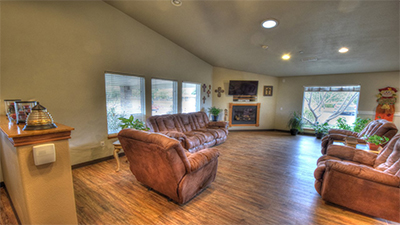
In compact homes, many activity occurs within a single, familiar space. The kitchen shows up from the living area. Bedrooms are a short leave. Staff are rarely more than a few actions from homeowners. The environment feels more like a large family home than a facility. That shift in scale changes whatever from anxiety levels to social engagement.
In a 10 or 12 bed home, homeowners rapidly find out where things are, who is likely to be in which chair, and who to request for help. Staff, in turn, discover private habits at a granular level: who likes their tea weak, which shoulder is painful when assisting with dressing, who requires a few additional minutes to get going in the morning. I have actually seen homeowners who were withdrawn in a larger assisted living setting become more talkative and relaxed within weeks of moving into a smaller home, just because they did not feel overloaded every time they got out of their room.
Large buildings amplify noise, movement, and unpredictability. For some older grownups, especially those with moderate dementia, that stimulation feels chaotic instead of dynamic. Smaller senior care homes offer a quieter baseline. There might still be laughter, tv, and the clatter of dishes, however the scale is easy to understand, and routines emerge naturally.
Consistent relationships: the quiet foundation of quality care
Ask any experienced nurse or care aide what truly improves results in elderly care, and a lot of will give the same answer: connection. The smaller sized the home, the much easier it is to build and keep stable relationships.
In compact homes, the core care group often consists of a handful of staff members who understand every resident well. Rotations are simpler. Personnel notice subtle modifications due to the fact that they see the same faces day after day. A small shift in gait, a new doubt during meals, a modification in state of mind at a specific time of day, these can be early indication of pain, infection, or cognitive decline.
In one 8 bed memory care home I worked with, a caretaker observed that a resident started rubbing her temples throughout late early mornings, prior to lunch. The resident, who had moderate dementia, could not clearly report pain. In a larger setting, this may have merged into the background noise of day-to-day care. In that small home, the personnel knew her normal patterns and acknowledged the modification. After a medical examination, it turned out she was experiencing headaches related to a new medication. Adjusting the dose dealt with the issue before it intensified into habits changes or rejection to eat.
Continuity likewise matters for emotional security. Older adults, particularly those with cognitive disability, function much better when they rely on individuals touching their bodies, managing their medications, and assisting them through individual care. In compact homes, you are less likely to hear, "I am tired of describing myself to brand-new people all the time," a complaint I have actually heard frequently from locals who live in bigger assisted living facilities.
Families feel the distinction too. When they visit a little home, they normally acknowledge every team member on task, and the staff understand them. Updates about health, memory care BeeHive Homes of Levelland mood, and care strategies are simpler due to the fact that there are less layers to browse. Rather of "Leave a message with the nurse desk," you often get a direct discussion at the kitchen area table.
Assisted living on a human scale
The term "assisted living" covers a large spectrum of support, from minimal aid with meals and housekeeping to quite extensive assistance with movement, continence, and individual care. In big neighborhoods, these services typically follow standardized schedules and pathways. That structure can be efficient, but it sometimes presses locals into the center's rhythm instead of supporting their own.
Compact assisted living homes are better placed to adapt to specific preferences. When you look after 8 or 10 homeowners rather of 80, versatility is more practical. Breakfast can extend over a longer window. Bath days can move without tossing a whole staffing grid into chaos. Staff can stick around at the table when a conversation is going well, instead of rushing to the next apartment.
One resident I remember clearly was a retired baker who had actually invested most of his adult life rising before dawn. In his first, larger assisted living facility, he was distressed by the late, restaurant design breakfast schedule. He would wait, pacing, in the hallway between 6 and 8 in the early morning. When he moved to a smaller sized home, the personnel created a basic regimen: a pot of coffee began at 6, with toast and jam available as soon as he concerned the kitchen area. The expense was minor. The impact on his sense of function and convenience was not.
That kind of individualization is possible in larger buildings, but it takes considerable organizational effort. In compact homes, it emerges naturally since the team can think and act at the scale of a household.
Memory care: why size and familiarity matter
Memory care is where the small home design frequently shines most clearly. People coping with dementia are acutely sensitive to environmental hints. Long hallways, multiple dining-room, elevators, and large groups can increase disorientation. When every door looks comparable and the structure feels like a maze, stress and anxiety and exit seeking habits frequently rise.
Compact memory care homes reduce the cognitive load. Fewer decision points, much shorter distances, more visual anchors. A resident can stand in the living area and see the cooking area, the garden door, and typically their own bedroom door down the hall. That visual clarity assists them orient without consistent verbal prompts.
The everyday circulation of a little memory care home likewise tends to be less fragmented. Instead of arranged "activities" in activity spaces, life itself ends up being the activity. Folding linens at the kitchen area table, stirring cookie dough with personnel guidance, watering a planter on the patio area, stacking napkins before meals. These are workable jobs that feel real, not staged entertainment.

A compact setting likewise makes it easier to arrange staff so that somebody is constantly present in the common location, not concealed in a workplace or nursing station. For citizens vulnerable to roaming or pacing, that consistent, calm existence is crucial. Gentle redirection happens early, when a resident first heads toward the incorrect door, not later on when they are already agitated.
This does not indicate that every person with dementia will choose a small home. Some individuals, especially in earlier phases, delight in the energy and variety of a bigger memory care area. The point is choice. When you understand how delicate a particular individual is to sound, mess, and unpredictability, you can better match them to an environment that supports staying abilities instead of continuously tough them.
Respite care: checking the waters in a smaller sized setting
Respite care uses momentary stays for older grownups who typically cope with household. It offers caretakers a break and permits recovery after hospitalizations or illnesses. A brief respite remain in a compact home can work as a low pressure way to experience assisted living or memory care.
Families typically stress that their loved one will feel "lost" or deserted if they go into respite. In a big community, that fear is not unfounded. New locals should learn building layouts, schedules, and faces, all within a brief time. For somebody already tired or puzzled, this can be overwhelming.
In a smaller home, the change tends to be gentler. There are fewer individuals to meet, less regimens to remember, and personnel have more time to stroll a brand-new resident through the day. I have actually seen respite guests who at first refused to leave the bedroom gradually start walking to the kitchen by themselves within a week, when they recognized that whatever they required was within a few steps.
Respite care in a compact setting is also important for families examining long term senior care alternatives. Spending two or 3 weeks observing personnel interactions, mealtimes, and life offers a more honest photo than any tour. If the respite visitor returns home, the family now has a concrete criteria: this is what a little setting felt like, this is how quickly personnel learned our relative's quirks, this is how communication worked.
Daily rhythms: meals, sleep, and the quiet details
Quality of life for older grownups is less about huge events and more about the numerous little touchpoints that fill each day. Compact homes are particularly well matched to handling these information since fewer residents indicate more attention per person.
Meals frequently show the difference. In a big assisted living dining room, personnel must move rapidly. Orders are taken, plates delivered, tables turned. Discussion between residents can be abundant, but there is restricted area for the remaining, calm feel of a household meal. Homeowners who consume slowly sometimes feel pressured. Those with moderate swallowing difficulties can be overlooked.
In a small home, meals look like household dining. Residents typically see or smell food being prepared. The cook may be the exact same person who served breakfast the day before. There is space for little improvisations, like slicing fruit differently for somebody with arthritis or offering an additional snack to a resident who tends to reduce weight. Personnel can see how much everyone eats without speaking with numerous charts.
Sleep regimens benefit too. Lots of older grownups wake throughout the night, whether from pain, incontinence, or longstanding practices. In a compact setting, night personnel frequently understand precisely who is most likely to be up at 2 a.m., and for what factor. They can plan appropriately: keeping a bathrobe ready, preparing a little snack, or using a warm beverage for somebody who ends up being anxious in the dark. Since the building is small, a single team member can monitor several rooms without relying entirely on alarms or cameras.
Small details like favored music, lighting levels, and chair positioning are much easier to manage regularly too. For example, positioning a preferred chair so a resident can see both the front door and the television can reduce uneasyness in some people with dementia. In a home with 8 chairs to handle, that is easy. In a community with 80 citizens in typical locations, personalized arrangements are much harder to maintain.
Safety, threat, and the reality of staffing
Families sometimes fret that smaller homes will have less resources for emergency situations. The fact is more nuanced. Big centers often have more devices and on site management, however they likewise count on more complex staffing patterns. Compact homes, on the other hand, depend greatly on the quality of a little group and clear protocols.
From a security point of view, the little scale has a number of benefits. In an emergency situation, staff can reach any resident rapidly due to the fact that ranges are brief. Evacuations, whether for fire drills or real occurrences, involve less people and less floorings. Personnel do not need to decide which of 3 stairwells to use or where a particular resident's room is in a long hallway.
Medication management can be more customized too. The nurse or medication specialist in a little home frequently understands everyone's medication history and negative effects without checking out thoroughly from the chart. That does not replace organized checks, but it adds an additional layer of intuitive safety.
There are trade offs. A very small home with just one or two personnel on responsibility during the night may struggle if two locals require immediate assistance simultaneously. This is where regulatory standards and practical staffing strategies matter. When evaluating any senior care option, families ought to ask detailed concerns about personnel ratios by shift, back up prepare for emergency situations, and how the home manages homeowners whose care requires increase.
A quick list can assist frame those conversations when thinking about compact assisted living or memory care homes:
Ask about day and night staffing levels, and clarify whether personnel are awake over night or enabled to sleep between checks. Request examples of how the home handled a recent emergency, such as a fall, medical crisis, or power outage. Observe whether staff appear rushed or able to spend a couple of calm minutes with citizens during your visit. Review how medications are ordered, saved, and administered, and who is responsible for oversight. Clarify what occurs if a resident's needs escalate, and whether the home can adapt or would require a move.Compact homes that address these questions clearly and confidently typically supply an exceptional balance of intimacy and safety.
Social life: depth over breadth
One legitimate concern households raise about smaller sized settings is social range. In a large assisted living community, citizens can often select from numerous activities and social circles: card games, workout classes, spiritual services, lectures, and trips. A compact home will not provide the very same menu.
The concern is just how much variety a particular resident in fact wants and can use. Many older adults do not take part in more than a handful of group activities even when they are readily available. They may prefer a couple of familiar companions over a crowd, especially if they have hearing loss, movement challenges, or memory issues.
In compact homes, social life tends to fixate shared meals, informal conversation, and small, repeatable activities. Staff play a vital function, not as entertainers, but as people who seed interactions. Sitting with two residents who might get along and prompting a simple conversation. Highlighting picture albums or familiar music. Helping someone phone a distant relative.
I once saw a caregiver in a 6 bed home silently nurture a relationship between two locals: a retired teacher and a retired librarian. They both liked poetry, but each was initially shy in group settings. Over numerous days, the caretaker asked, one at a time, about favorite books. That led to a afternoon where they took turns reading brief poems aloud at the kitchen table. It was a small minute, however for those females it provided continuity and significance that no bingo calendar could match.
For some people, especially younger elders who are still driving or taking part in outdoors clubs, a larger neighborhood's social calendar will be better. The secret is truthful evaluation: does the individual thrive on novelty and frequent large group events, or do they value predictability and intimate connection?
Family participation: simpler when the door feels open
One underappreciated benefit of compact senior care homes is the ease of household involvement. Households frequently report that going to a small home feels more like going to a relative's home than getting in an institution. The environment can discreetly encourage longer, more relaxed visits.

Practical barriers are fewer. Parking is typically close to the front door. There are no multi step check ins or keycard elevators to browse. When a family member walks in, they frequently see their loved one within seconds, rather than needing to locate them in a big building.
Communication can likewise be more fluid. In a compact home, a daughter might sound the doorbell and discover the same caretaker who answered the phone about her father's brand-new medication the day in the past. Updates and questions become an ongoing discussion rather of a series of detached calls to different departments.
This openness benefits staff too. When households exist in a workable way, they can provide context that improves care: lifelong routines, food dislikes, spiritual requirements, and sets off for stress and anxiety. In a little home, it is reasonable for the entire team to take in and act upon that understanding, not just the nurse manager.
Of course, limits still matter. Staff need time and space to finish tasks, and some households inadvertently interrupt regimens by treating the home as completely their own. Experienced compact homes develop clear expectations about checking out hours, shared areas, and personal privacy, then interact those expectations plainly.
Cost, regulation, and practical expectations
No design of senior care is ideal, and compact homes are no exception. Expenses vary commonly by region, however smaller sized homes can sometimes be more pricey per resident than larger facilities since they have fewer beds to spread out fixed expenses. On the other hand, they typically have lower overhead and less features that require upkeep, which can balance out expenses.
Regulatory frameworks likewise differ. In some jurisdictions, residential care homes fall under the very same guidelines as large assisted living and memory care neighborhoods. In others, they operate under separate licensing categories with unique staffing requirements and maximum resident counts. Families need to take some time to comprehend what licensure means in their area, because terms like "board and care" or "individual care home" can mask substantial differences.
Realistic expectations are crucial. A compact home can not offer the full range of services that a skilled nursing center or medical facility deals. Residents with extremely intricate medical requirements, such as those needing frequent intravenous therapies or ventilator support, will typically require more intensive settings. The strength of smaller sized homes depends on relationship based care for people who need assistance with day-to-day living, supervision, and consistent support, not advanced medical interventions.
When expectations align with what the home can deliver, satisfaction tends to be high. Families report that they feel known, that their concerns are responded to without delay, and that their loved one is not simply a space number on a census sheet.
Matching the person to the place
The small home design for senior care, including assisted living, memory care, and respite care, rests on a basic concept: individuals do better when they live in environments scaled to their capabilities, preferences, and need for connection. For numerous older grownups, particularly those who tire quickly, end up being puzzled in big crowds, or worth peaceful routines, a compact setting fits that description.
That does not mean every little home is outstanding or every large community is impersonal. Quality depends upon management, staff training, culture, and transparency. The size of the structure, however, strongly forms what is realistically possible day after day.
When families face the difficult task of selecting elderly care, it helps to look beyond marketing products and envision the smallest units of life: how breakfast unfolds, who notifications if someone skips a meal, how rapidly help shows up when a resident stands unsteadily from a chair, whether staff remember that a specific person hates peas or chooses showers at night.
Compact senior care homes are constructed for that level of attention. They are wrong for everybody, but for the citizens who need them, small genuinely can be beautiful.
BeeHive Homes of Levelland provides assisted living care
BeeHive Homes of Levelland provides memory care services
BeeHive Homes of Levelland provides respite care services
BeeHive Homes of Levelland supports assistance with bathing and grooming
BeeHive Homes of Levelland offers private bedrooms with private bathrooms
BeeHive Homes of Levelland provides medication monitoring and documentation
BeeHive Homes of Levelland serves dietitian-approved meals
BeeHive Homes of Levelland provides housekeeping services
BeeHive Homes of Levelland provides laundry services
BeeHive Homes of Levelland offers community dining and social engagement activities
BeeHive Homes of Levelland features life enrichment activities
BeeHive Homes of Levelland supports personal care assistance during meals and daily routines
BeeHive Homes of Levelland promotes frequent physical and mental exercise opportunities
BeeHive Homes of Levelland provides a home-like residential environment
BeeHive Homes of Levelland creates customized care plans as residents’ needs change
BeeHive Homes of Levelland assesses individual resident care needs
BeeHive Homes of Levelland accepts private pay and long-term care insurance
BeeHive Homes of Levelland assists qualified veterans with Aid and Attendance benefits
BeeHive Homes of Levelland encourages meaningful resident-to-staff relationships
BeeHive Homes of Levelland delivers compassionate, attentive senior care focused on dignity and comfort
BeeHive Homes of Levelland has a phone number of (806) 452-5883
BeeHive Homes of Levelland has an address of 140 County Rd, Levelland, TX 79336
BeeHive Homes of Levelland has a website https://beehivehomes.com/locations/levelland/
BeeHive Homes of Levelland has Google Maps listing https://maps.app.goo.gl/G3GxEhBqW7U84tqe6
BeeHive Homes of Levelland Assisted Living has Facebook page https://www.facebook.com/beehivelevelland
BeeHive Homes of Levelland Assisted Living has YouTube page https://www.youtube.com/@WelcomeHomeBeeHiveHomes
BeeHive Homes of Levelland won Top Assisted Living Homes 2025
BeeHive Homes of Levelland earned Best Customer Service Award 2024
BeeHive Homes of Levelland placed 1st for Senior Living Communities 2025
People Also Ask about BeeHive Homes of Levelland
What is BeeHive Homes of Levelland Living monthly room rate?
The rate depends on the level of care that is needed. We do an initial evaluation for each potential resident to determine the level of care needed. The monthly rate is based on this evaluation. There are no hidden costs or fees
Can residents stay in BeeHive Homes until the end of their life?
Usually yes. There are exceptions, such as when there are safety issues with the resident, or they need 24 hour skilled nursing services
Do we have a nurse on staff?
No, but each BeeHive Home has a consulting Nurse available 24 – 7. if nursing services are needed, a doctor can order home health to come into the home
What are BeeHive Homes’ visiting hours?
Visiting hours are adjusted to accommodate the families and the resident’s needs… just not too early or too late
Do we have couple’s rooms available?
Yes, each home has rooms designed to accommodate couples. Please ask about the availability of these rooms
Where is BeeHive Homes of Levelland located?
BeeHive Homes of Levelland is conveniently located at 140 County Rd, Levelland, TX 79336. You can easily find directions on Google Maps or call at (806) 452-5883 Monday through Sunday 9:00am to 5:00pm
How can I contact BeeHive Homes of Levelland?
You can contact BeeHive Homes of Levelland by phone at: (806) 452-5883, visit their website at https://beehivehomes.com/locations/levelland/,or connect on social media via Facebook or YouTube
You might take a short drive to the Levelland City Park.Levelland City Park provides shaded areas and benches that enhance assisted living, senior care, elderly care, and respite care outdoor activities.